The Complete Guide to Cleaning Artificial Grass in 2026
Artificial grass has transformed gardens across the UK, offering a lush, green lawn without the mowing, watering or muddy footprints associated with natural turf. Whether you’ve chosen artificial grass for its low maintenance, year-round appearance or because it’s ideal for children and pets, one thing remains true: it still needs regular care to keep it looking, feeling and smelling its best.
One of the biggest misconceptions is that artificial grass is completely maintenance free. While it certainly requires far less upkeep than natural grass, dirt, leaves, pet waste and airborne debris will still accumulate over time. Without a simple cleaning routine, your lawn can begin to lose its fresh appearance, flatten under foot traffic and develop unpleasant odours.
This guide explains everything you need to know about how to clean artificial grass, including routine maintenance, deep cleaning, pet care, seasonal advice and the products that can help you protect your investment for years to come.
Why Cleaning Artificial Grass Matters
Artificial grass is designed to be durable and weather resistant, but daily use inevitably leaves its mark. Dust, pollen, mud, food, fallen leaves and pet waste can all build up between the fibres.
For households with dogs, bacteria left behind by urine can also create unpleasant smells, particularly during warmer weather when heat accelerates bacterial growth.
Regular maintenance helps to:
- Keep your lawn looking vibrant and upright
- Reduce unpleasant odours
- Improve drainage performance
- Prevent moss and algae in damp areas
- Extend the lifespan of your artificial grass
- Create a cleaner environment for children and pets
A little maintenance throughout the year is far easier than trying to restore a neglected lawn.
What You'll Need to Clean Artificial Grass
The good news is that cleaning artificial grass doesn’t require specialist equipment.
For routine maintenance, you’ll need:
- A stiff brush or artificial grass rake
- A garden hose with a spray nozzle
- A leaf blower or plastic leaf rake
- A bucket of clean water
- A specialist artificial grass cleaner
- Protective gloves if handling pet waste
Avoid using metal rakes or sharp garden tools, as these can damage the grass fibres.
How Often Should You Clean Artificial Grass?
Cleaning frequency depends on how your lawn is used.
Family Gardens
Lightly brush the grass every couple of weeks and rinse occasionally to remove dust and pollen.
Gardens with Dogs
Rinse regularly and carry out a deeper clean every four to six weeks, or more frequently during hot weather.
High Traffic Areas
If your garden is regularly used for entertaining, children’s play or outdoor dining, inspect it weekly and remove debris before it builds up.
A consistent routine prevents larger problems from developing.
Step 1: Remove Leaves and Debris
The first step in cleaning artificial grass is removing loose material from the surface.
Leaves, twigs and organic matter not only make your lawn look untidy but can also trap moisture, encouraging moss and algae to develop.
Use:
- A leaf blower
- A soft plastic rake
- A stiff outdoor brush
Avoid dragging heavy tools across the surface.
Step 2: Brush the Grass Fibres
Over time, foot traffic naturally causes artificial grass fibres to lean in one direction.
Brushing against the pile helps restore the upright appearance while removing trapped dust and debris.
Brush:
- Against the grain
- In different directions
- More frequently in heavily used areas
This simple step dramatically improves the appearance of your lawn.
Step 3: Rinse with Clean Water
Using a garden hose is one of the easiest ways to remove surface dirt.
Rinsing helps wash away:
- Dust
- Mud
- Pollen
- Food residue
- Bird droppings
Although rinsing alone won’t eliminate bacteria or stubborn odours, it forms an important part of routine maintenance.
Step 4: Deal with Pet Waste Properly
Artificial grass is extremely popular with dog owners, but pet waste should always be removed promptly.
Solid waste should be picked up immediately before rinsing the area with water.
Dog urine usually drains through the grass, but regular rinsing helps prevent residue from accumulating.
If your lawn begins developing persistent smells, it’s time to use a dedicated artificial grass cleaner designed to target odour-causing bacteria.
Step 5: Deep Clean with an Artificial Turf Cleaner
General household cleaners aren’t designed for artificial grass.
Many simply mask unpleasant smells instead of addressing the bacteria responsible for them.
A specialist artificial turf cleaner penetrates the grass fibres, helping eliminate the source of odours while keeping your lawn fresh for longer.
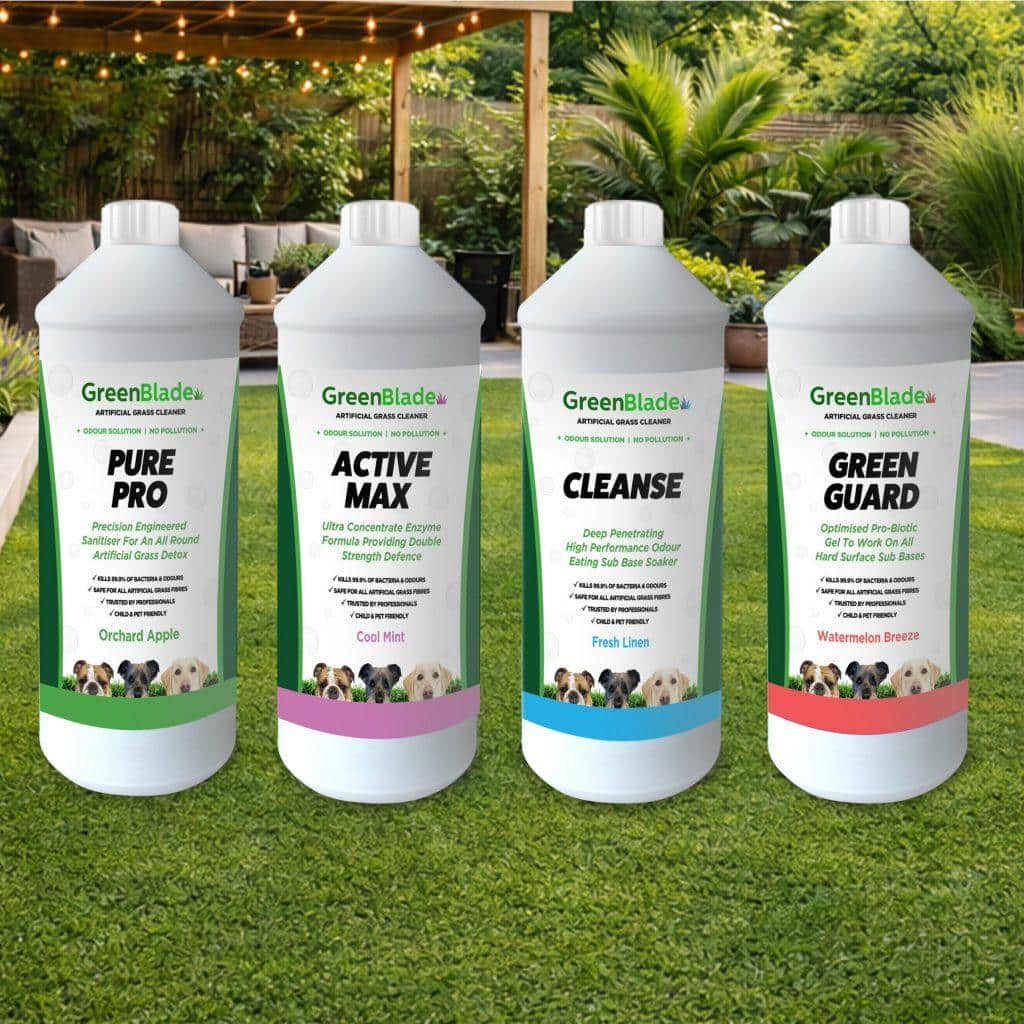
GreenBlade products are specifically developed for artificial grass and are suitable for family gardens with children and pets when used as directed.
How to Remove Dog Urine Smells
Dog urine is the most common reason homeowners search for cleaning advice.
The smell isn’t caused by the artificial grass itself but by bacteria that build up after repeated use.
Warm weather accelerates bacterial growth, making odours much more noticeable during spring and summer.
To reduce smells:
- Remove solid waste quickly.
- Rinse toilet areas regularly.
- Deep clean with a specialist artificial grass cleaner.
- Maintain a regular cleaning schedule.
For households with multiple dogs, preventative maintenance is far more effective than waiting until unpleasant odours appear.
Cleaning Common Garden Spills
Mud
Allow mud to dry before brushing it away.
Food and Drink
Rinse with water as soon as possible and use a specialist cleaner if required.
Bird Droppings
Remove carefully before rinsing thoroughly.
Tree Sap
Use warm water and a soft cloth before applying an artificial grass cleaner if residue remains.
Chewing Gum
Freeze the gum using ice before carefully lifting it away.
Can You Pressure Wash Artificial Grass?
Pressure washers can be used with caution.
If you decide to pressure wash your lawn:
- Use a low-pressure setting.
- Keep the nozzle at least 30 centimetres away.
- Spray at a shallow angle.
- Avoid concentrating on one spot.
Excessive pressure can disturb the infill or damage the fibres.
For most routine maintenance, a garden hose and specialist cleaner are sufficient.
Cleaning Artificial Grass in Every Season
Spring
Remove winter debris, brush fibres upright and carry out a deep clean before outdoor entertaining begins.
Summer
Increase rinsing frequency, especially if you have dogs. Heat makes odours much more noticeable.
Autumn
Clear fallen leaves regularly to prevent moisture build-up and staining.
Winter
Remove snow naturally where possible and avoid using sharp tools to scrape ice from the surface.
A seasonal approach helps keep your lawn looking its best all year.
Mistakes to Avoid
Many homeowners accidentally shorten the lifespan of their artificial grass by using unsuitable cleaning methods.
Avoid:
- Bleach
- Strong household chemicals
- Wire brushes
- Metal garden rakes
- Harsh solvents
- Burning charcoal directly on the lawn
- Leaving pet waste for extended periods
Always use products specifically formulated for artificial grass whenever possible.
Why Specialist Artificial Grass Cleaners Are Worth It
Purpose-made cleaners are designed to:
- Target odour-causing bacteria
- Protect synthetic fibres
- Leave no sticky residue
- Help maintain drainage
- Be easy to apply
- Support long-lasting freshness
Unlike general household products, they’re created with artificial turf in mind.
Which GreenBlade Products Should You Choose?
Every lawn is different.
The amount of maintenance required depends on:
- Garden size
- Number of dogs
- Frequency of use
- Drainage performance
- Local weather conditions
Rather than guessing, GreenBlade offers a free Odour Index Calculator that recommends the most suitable products based on your individual garden.
Simply answer a few quick questions and receive personalised recommendations in under a minute.
Frequently Asked Questions
How do you clean fake grass?
Brush away debris, rinse with water and use a specialist artificial grass cleaner as part of a regular maintenance routine.
What is the best artificial turf cleaner?
Choose a cleaner specifically designed for synthetic grass that targets bacteria and odours while remaining suitable for homes with children and pets.
How often should artificial grass be cleaned?
Most households should perform light maintenance every couple of weeks and a deeper clean every four to six weeks. Homes with multiple dogs may benefit from more frequent cleaning.
Can artificial grass smell?
Yes. The smell usually comes from bacteria left behind by pet urine or organic matter rather than the grass itself.
Is artificial grass difficult to maintain?
Not at all. With a simple routine of brushing, rinsing and occasional deep cleaning, artificial grass remains attractive and hygienic throughout the year.
Final Thoughts
Artificial grass is one of the easiest ways to enjoy a beautiful garden all year round, but like any outdoor surface, it benefits from regular care. By removing debris, brushing the fibres, rinsing the lawn and using products designed specifically for artificial turf, you can keep your garden looking vibrant and smelling fresh in every season.
For dog owners, preventative maintenance is especially important. Regular cleaning helps stop bacteria from building up, reducing odours before they become noticeable.
If you’re unsure which products are best for your lawn, try GreenBlade’s free Odour Index Calculator. It provides tailored recommendations based on your garden size, the number of dogs in your household and how often your lawn is used.
And if you’re new to GreenBlade, don’t forget to sign up to our mailing list to receive 20% off your first order. It’s an easy way to start your artificial grass care routine with confidence and enjoy a cleaner, fresher garden all year long.