Why Your Artificial Grass Still Smells After Rain (And How to Fix It)
You’d be forgiven for thinking that a heavy downpour would leave your artificial grass smelling fresh. After all, rain washes cars, cleans patios and gives natural lawns a healthy boost. So why does your artificial grass sometimes smell even worse after it’s been raining?
If you’ve been searching for why artificial grass smells after rain, you’re not alone. It’s one of the most common questions asked by homeowners with artificial lawns—particularly those with dogs.
The truth is that rain doesn’t cause the smell. It simply makes an existing problem more noticeable.
In this guide, we’ll explain exactly why artificial lawn odour develops, why rain isn’t enough to solve it, and the simple steps you can take to keep your artificial grass fresh all year round.
Does Rain Make Artificial Grass Smell?
No—but it can highlight an existing odour.
Artificial grass is designed with drainage holes that allow water to pass through quickly. During rainfall, water washes over the surface and drains away, taking loose dirt and dust with it.
However, rain doesn’t remove everything.
Bacteria, urine residue and organic debris often remain trapped deep within the grass fibres, infill and drainage layers. When rain wets these materials, it can temporarily release trapped odours into the air, making the smell much more noticeable.
Many homeowners assume the rain has caused the problem, when in reality it has simply revealed it.
What Causes Artificial Lawn Odour?
Artificial grass itself doesn’t smell.
The unpleasant odour comes from materials that build up over time, particularly in gardens used by pets.
The most common causes include:
- Dog urine
- Pet waste residue
- Bacteria
- Decaying leaves
- Mud and organic debris
- Food and drink spills
- Poor drainage
- Moss and algae in damp areas
As bacteria break down organic matter, they release gases such as ammonia, creating the unpleasant smell many people associate with artificial grass.
Why rain doesn't wash away the smell
One of the biggest misconceptions is that rainfall naturally cleans artificial grass.
While rain does remove loose surface dirt, it doesn’t eliminate the bacteria responsible for odours.
These bacteria cling to:
- Artificial grass fibres
- Sand or rubber infill
- Drainage layers
- Organic matter trapped beneath the surface
Without targeted cleaning, they continue multiplying regardless of the weather.
This is why your lawn can smell fresh immediately after installation but gradually develop stronger odours over time.
Why dog owners notice it most.
Homes with dogs are far more likely to experience artificial lawn odour.
Every time a dog urinates on the grass, liquid drains through the surface, but tiny amounts of residue remain behind.
Over weeks and months this creates an ideal environment for bacteria.
When rain arrives, moisture reactivates these bacteria and helps release trapped ammonia into the air.
If you have multiple dogs or a designated toilet area, the smell can become particularly noticeable.
The Hidden role of bacteria.
Many people assume urine is responsible for the smell.
In reality, urine is only the beginning of the process.
The real culprit is bacteria.
These microscopic organisms feed on organic matter left behind by pet urine and waste.
As they break it down, they produce the gases responsible for unpleasant odours.
Simply masking the smell with fragrance doesn’t remove these bacteria.
That’s why odours often return within days when using ordinary household cleaning products.
Could poor drainage be the issue?
Sometimes the issue isn’t just bacteria—it’s drainage.
Artificial grass relies on water flowing freely through the surface and into the sub-base.
If drainage becomes restricted because of compacted infill, debris or poor installation, moisture remains trapped beneath the lawn.
This damp environment encourages bacteria, algae and mould to develop, making smells worse after rainfall.
Signs of drainage problems include:
- Water pooling on the surface.
- Persistent damp patches.
- Moss growth.
- Muddy areas around the lawn.
- A musty smell even during cooler weather.
If drainage issues persist, it may be worth having your installation inspected.
Common cleaning mistakes
Many homeowners unknowingly make the problem worse by using unsuitable cleaning methods.
Simply Hosing It Down
Water removes surface dirt but doesn’t tackle odour-causing bacteria.
Using Bleach
Bleach may kill some bacteria temporarily but isn’t designed for artificial grass and can damage fibres or surrounding landscaping.
Spraying Air Freshener
Covering the smell doesn’t eliminate the source.
As soon as the fragrance fades, the odour usually returns.
Waiting Until It Smells
The best time to clean artificial grass is before unpleasant odours develop.
Preventative maintenance is far more effective than emergency cleaning.
How to eliminate artificial grass odours properly.
A simple maintenance routine makes a huge difference.
1. Remove Solid Pet Waste Promptly
Leaving waste on the lawn allows bacteria to multiply rapidly.
2. Rinse Toilet Areas Regularly
Frequent rinsing helps reduce urine residue before it builds up.
3. Brush the Grass
Brushing lifts the fibres and removes trapped debris.
4. Remove Leaves and Organic Matter
Decaying leaves create additional food for bacteria.
5. Use a Specialist Artificial Grass Cleaner
Purpose-made cleaners help tackle the bacteria responsible for unpleasant smells rather than simply masking them.
Why specialists artificial grass cleaner works better.
General household cleaners weren’t designed for synthetic lawns.
Many contain soaps, perfumes or chemicals that provide only temporary results.
A specialist artificial grass cleaner UK homeowners can rely on is formulated specifically to:
- Target odour-causing bacteria.
- Help maintain drainage.
- Leave no sticky residue.
- Freshen the lawn without relying solely on fragrance.
- Support long-term lawn maintenance.
This is particularly important for homes with dogs where bacteria build up more quickly.
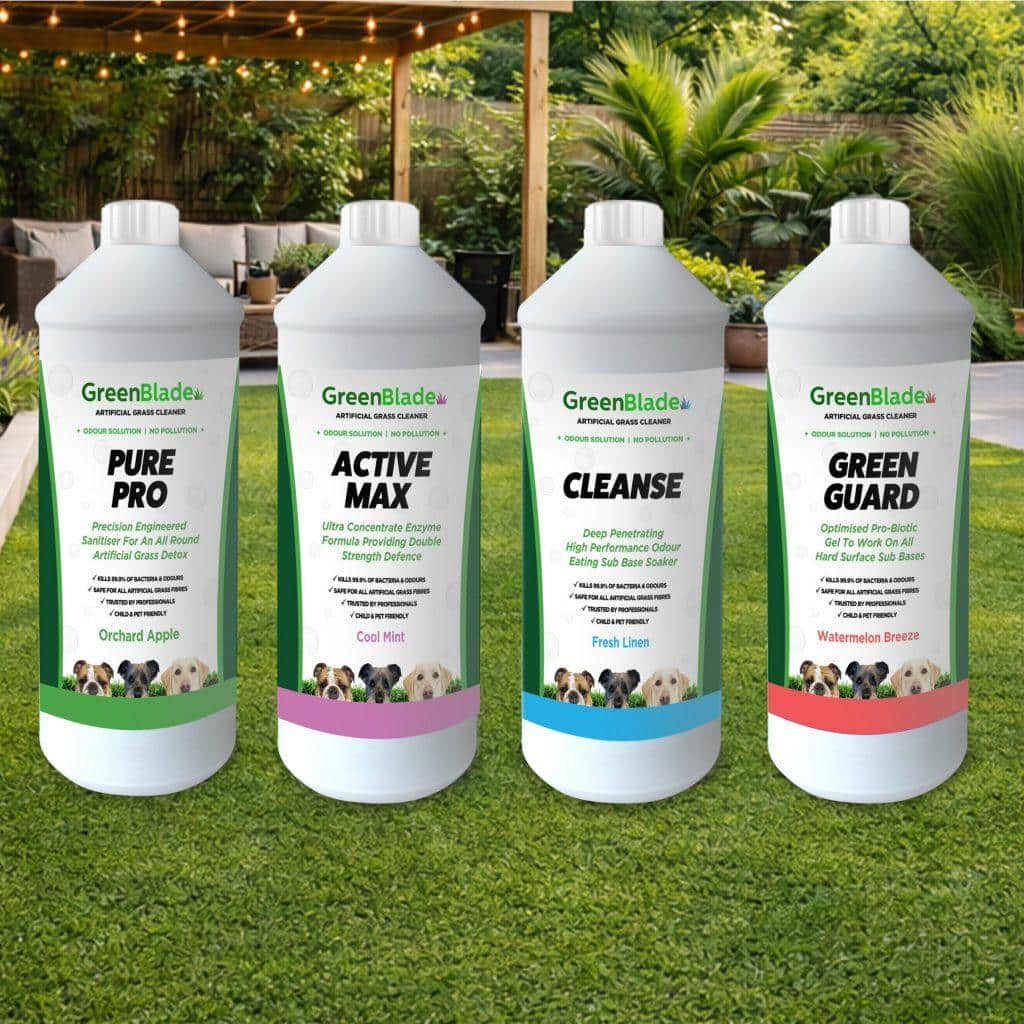
At GreenBlade, we’ve developed our products specifically for artificial grass.
Rather than masking unpleasant smells, our cleaning solutions are designed to become part of a regular maintenance routine that helps reduce the bacteria responsible for artificial lawn odours.
Our products are:
- Made in the UK.
- Designed specifically for artificial grass.
- Suitable for homes with pets and children when used as directed.
- Fast acting.
- Easy to apply.
- Ideal for year-round maintenance.
Whether you’re carrying out a seasonal deep clean or maintaining freshness throughout the summer, GreenBlade products help keep your lawn looking and smelling its best.
Not sure what your artificial grass needs?
Every artificial lawn is different.
The cleaning routine that’s right for a small garden with one dog may not be enough for a larger family garden with several pets.
That’s why we’ve created the GreenBlade Odour Index Calculator.
Answer a few quick questions about:
- Your garden size.
- The number of dogs.
- Dog size.
- Type of artificial grass.
We’ll recommend the most suitable GreenBlade products to help you tackle odours effectively.
Frequently Asked Questions
Why does my artificial grass smell worse after rain?
Rain doesn’t create the smell. It wets bacteria and organic matter already present within the lawn, making existing odours more noticeable.
Can rain clean artificial grass?
Rain helps wash away loose surface dirt but doesn’t eliminate the bacteria responsible for unpleasant smells.
Why does fake grass smell after rain even though I wash it?
Surface rinsing doesn’t remove bacteria trapped within the fibres and drainage layers. A specialist artificial grass cleaner is usually needed to tackle the underlying cause.
Is the smell caused by the grass?
No. Artificial grass itself doesn’t smell. The odour comes from bacteria breaking down pet urine and organic debris.
How do I stop artificial lawn odour permanently?
Regular brushing, rinsing, removing debris and using a purpose-made artificial grass cleaner as part of an ongoing maintenance routine provides the best long-term results.
Keep your artificial grass fresh in every season.
If your artificial grass smells after rain, don’t assume your lawn needs replacing.
In most cases, the smell is simply a sign that bacteria and organic residue have built up over time.
By adopting a regular cleaning routine and using products designed specifically for artificial grass, you can eliminate the source of unpleasant odours and enjoy a cleaner, fresher garden all year round.
If you’re unsure where to start, try the free GreenBlade Odour Index Calculator. It takes less than a minute to complete and recommends the ideal products based on your garden, your pets and your cleaning needs.
And if you’re new to GreenBlade, don’t forget to sign up to our mailing list to receive 20% off your first order. It’s the easiest way to begin your journey towards a fresher, healthier artificial lawn.