How to Remove Dog Urine Smells from Artificial Grass Permanently
Artificial grass has become one of the most popular garden choices for dog owners across the UK. It’s low maintenance, looks fantastic all year round and provides a clean, durable surface for pets to enjoy. However, one issue almost every pet owner encounters at some point is the lingering smell of dog urine.
If you’ve found yourself searching for how to remove dog urine smell from artificial grass, you’re certainly not alone. During warmer weather, those unpleasant odours can quickly become stronger, making your garden less enjoyable for family, friends and even your pets.
The good news is that artificial grass doesn’t have to smell. By understanding what causes the odour and using the correct cleaning routine, you can enjoy a fresh, hygienic lawn throughout the year.
In this guide, we’ll explain exactly why artificial grass starts to smell, why some common cleaning methods don’t work, and how you can permanently tackle the problem.
Why Does Artificial Grass Smell of Dog Urine?
Contrary to popular belief, the smell isn’t caused by the artificial grass itself.
Artificial turf is made from synthetic fibres that don’t absorb urine in the same way as natural grass. Instead, dog urine drains through the grass into the sub-base below. Over time, small amounts of urine residue, bacteria and organic matter begin to build up within the grass fibres, infill and drainage layers.
When temperatures rise, bacteria become much more active. These bacteria break down the organic waste left behind in dog urine, releasing ammonia and other unpleasant compounds responsible for the strong smell many dog owners experience during spring and summer.
If your garden has multiple dogs, poor drainage or receives lots of sunshine, the problem can become much more noticeable.
Why Does It Smell Worse During Summer?
Many homeowners notice that their artificial lawn smells perfectly fine throughout winter but develops a strong odour once the weather improves.
There are several reasons for this:
- Higher temperatures speed up bacterial growth.
- Warm weather causes ammonia to evaporate more quickly, making smells easier to detect.
- Dogs spend more time outdoors.
- Gardens receive less natural rainfall to help rinse away surface debris.
- Barbecues and outdoor gatherings mean more people notice the smell.
This is why summer is the perfect time to introduce a proper artificial grass cleaning routine.
Can Rain Wash Away Dog Urine?
This is one of the biggest misconceptions.
Although heavy rain helps rinse away loose dirt and surface residue, it rarely removes the bacteria that cause unpleasant smells.
The bacteria responsible for the odour cling to the grass fibres and settle deep within the infill and drainage layers. Once established, they continue multiplying regardless of occasional rainfall.
If you’ve noticed your lawn still smells after heavy rain, it’s because the source of the problem is still there.
Common Cleaning Methods That Don't Solve the Problem
When homeowners first notice an unpleasant smell, they often try household products before investing in a specialist artificial grass cleaner.
Unfortunately, many of these only provide temporary relief.
Simply Hosing It Down
Water can dilute urine and wash away surface dirt, but it doesn’t eliminate the bacteria causing the smell.
Washing-Up Liquid
Washing-up liquid may remove visible dirt but has very little effect on odour-causing bacteria.
White Vinegar
While vinegar is often recommended online, its effectiveness is limited outdoors. It quickly becomes diluted and doesn’t provide long-lasting odour control.
Bleach
Bleach should never be used on artificial grass.
It can damage fibres, affect drainage, discolour certain surfaces and may be harmful to pets if not rinsed thoroughly.
Strong Household Disinfectants
Many general-purpose cleaners weren’t designed for artificial grass and may leave residues that attract dirt or interfere with drainage.
The Best Way to Remove Dog Urine Smells from Artificial Grass
The most effective solution is to remove the bacteria responsible for the odour rather than trying to mask the smell with perfumes.
A dedicated artificial grass cleaning routine should include:
- Removing solid pet waste promptly.
- Rinsing the affected area regularly.
- Applying a specialist artificial grass cleaner designed to target bacteria.
- Maintaining the lawn throughout the year rather than waiting until smells become noticeable.
Purpose-built cleaners penetrate deep into the grass fibres, helping break down the bacteria responsible for unpleasant odours while leaving your lawn fresh and hygienic.
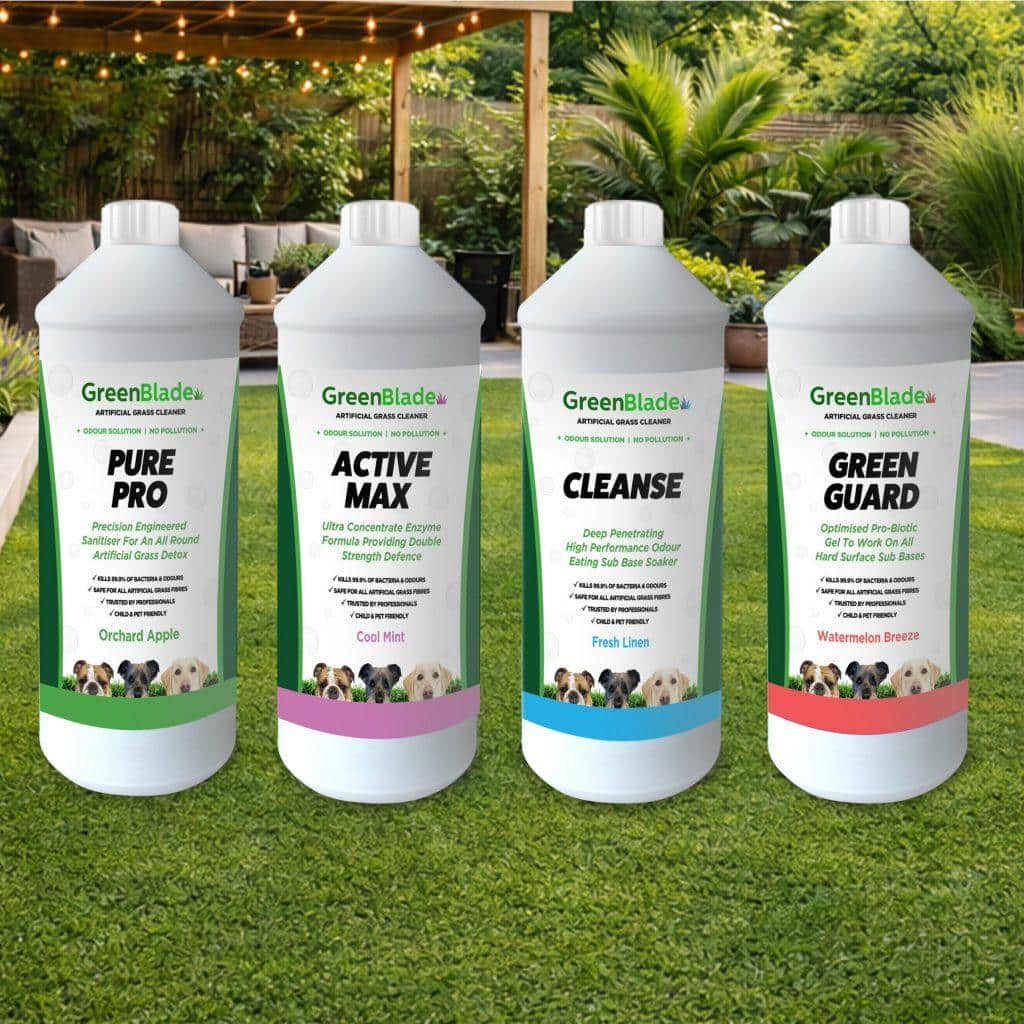
Why GreenBlade Products Work
At GreenBlade, we’ve developed our products specifically for artificial grass.
Unlike general household cleaners, our formulas are designed to tackle the source of unpleasant odours while remaining suitable for homes with children and pets.
Our range is:
- Made in the UK
- Child and pet safe when used as directed
- Designed specifically for artificial grass
- Fast acting
- Long-lasting
- Easy to apply
Whether you’re carrying out a deep clean or maintaining freshness between washes, GreenBlade has a solution for every type of garden.
Not Sure Which Products You Need?
Every garden is different.
A household with one small dog requires a very different cleaning routine from a family with several large dogs using the lawn throughout the day.
That’s why we’ve created our Odour Index Calculator.
Simply answer a few quick questions about:
- Garden size
- Number of dogs
- Dog size
- Artificial grass type
We’ll recommend the ideal GreenBlade products for your garden, helping you avoid unnecessary purchases while ensuring you achieve the best possible results.
How Often Should You Clean Artificial Grass?
The ideal cleaning schedule depends on how heavily your lawn is used.
As a general guide:
One small dog
- Rinse weekly
- Deep clean every 6–8 weeks
Two dogs
- Rinse two or three times each week
- Deep clean every month
Three or more dogs
- Rinse frequently
- Carry out a deep clean every two to three weeks during warmer months
Using a preventative treatment between deep cleans can also help keep bacteria under control before odours become noticeable.
Tips to Prevent Artificial Grass Smells
Keeping your lawn fresh doesn’t need to be difficult.
Simple habits can make a huge difference:
- Remove solid waste immediately.
- Rinse toilet areas regularly.
- Keep leaves and debris off the lawn.
- Brush the fibres occasionally to improve airflow.
- Use specialist artificial grass cleaning products.
- Deep clean before the hottest months arrive.
- Treat odours early instead of waiting until they become severe.
Preventative maintenance is always easier than trying to eliminate heavy odours later.
Frequently Asked Questions
Will dog urine damage artificial grass?
No. Quality artificial grass is designed to withstand regular pet use. The problem is usually the bacteria and residue left behind, not the urine itself.
Can I use vinegar to clean artificial grass?
Vinegar may temporarily reduce some odours but isn’t designed to eliminate the bacteria responsible for persistent smells.
Is artificial grass hygienic for dogs?
Yes. When cleaned and maintained correctly, artificial grass provides a safe, hygienic surface for pets and families.
How do I know which GreenBlade products I need?
Our free Odour Index Calculator recommends the best products based on your garden size, number of dogs and usage levels.
Keep Your Garden Fresh All Year Round
A fresh-smelling garden shouldn’t be something you only enjoy during cooler months.
With the right maintenance routine and products designed specifically for artificial grass, you can permanently reduce unpleasant dog urine odours and enjoy your outdoor space throughout the year.
Whether you’re preparing for summer barbecues, family gatherings or simply want to enjoy your garden without embarrassment, GreenBlade is here to help.
Not sure where to start?
Try our free Odour Index Calculator to receive a personalised product recommendation, then claim 20% off your first order when you sign up to our mailing list.
Your garden should smell just as good as it looks.